Springtime in Rome
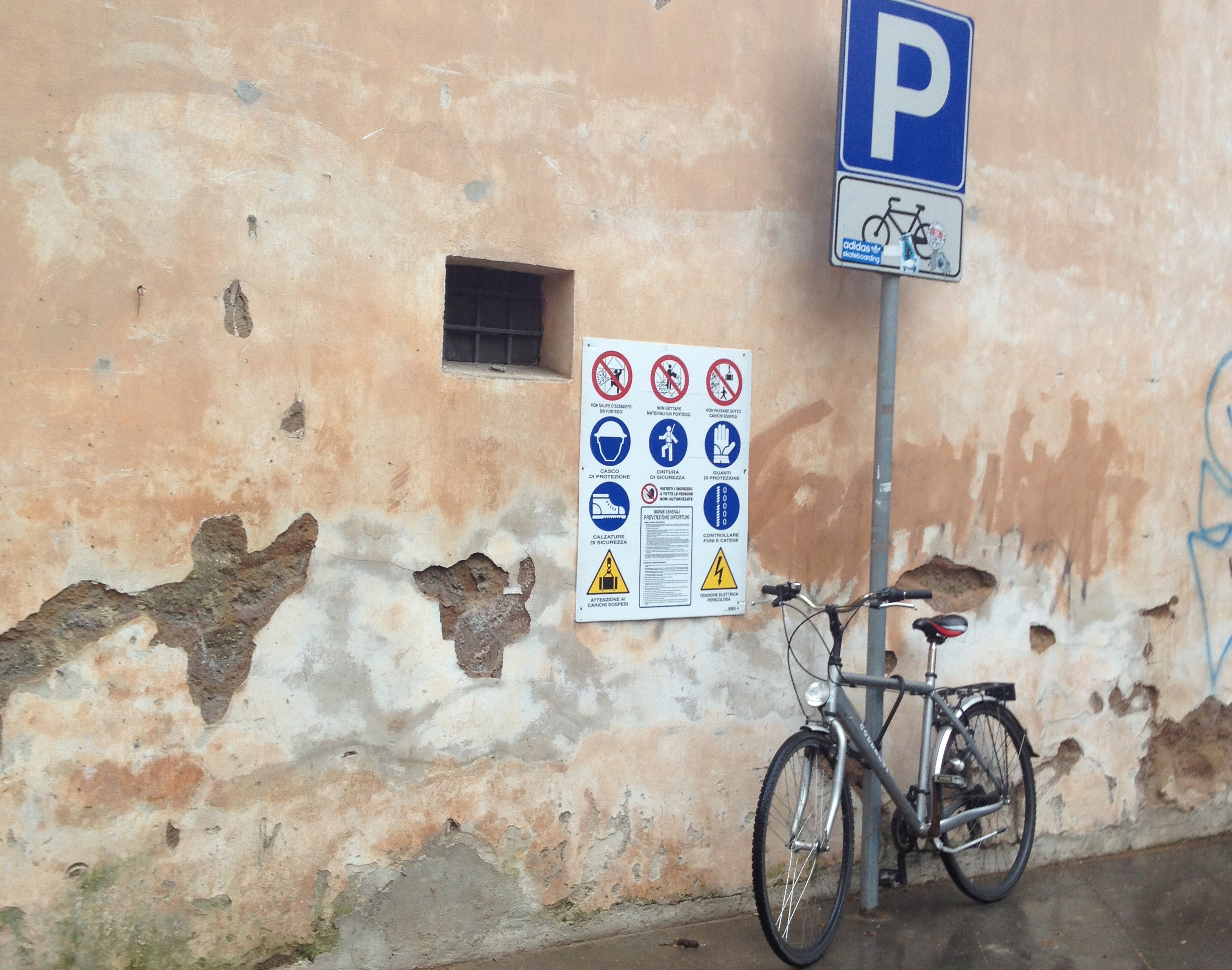
The one parking spot for bikes in Trastevere?
This winter has dragged on long enough. I’ve seen the mimosa in bloom and if I weren’t still stuffed up from the winter flu I would have smelled it. The rain isn’t quite as cold as it was a week ago. The banks of the Tiber are slimy with mud but no longer under water. Today big gusts of wind did their best to clean up the city, knocking down dead branches and illegal billboards.
Italians have voted for change at the national level and maybe even the Vatican will embark on some spring cleaning. Finally, in a month or so, Rome will choose a new mayor and, one hopes, set about putting its own house in order.
It has been a long winter and Rome is at a low point, at least from my personal observations. Today, while biking (slowly) through a “car-free” street in Trastevere which was full of parked cars a woman backed into me in a Fiat and then yelled at me for not watching where I was going. I called the police but got a recording saying no one could answer and to call later. So I went to the police station around the corner on Viale Trastevere and they told me to telephone, that they didn’t deal with traffic crime. When I gave up and returned to the same pedestrian area on my way to work a motorcycle zipped straight at me, honked and swore and barely missed me. I swear I must have a target on me.
Springtime is coming and I sense Romans are about to wake up and say a big collective “basta!”, that’s enough. If something doesn’t work (and there are many things that don’t) it’s about to get fixed. Spring cleaning will mean getting rid of all the trash that has been piling up for years: abandoned cars and scooters–right, if it’s parked on the sidewalk it’s abandoned–illegal billboards, and miscellaneous rubbish all have to go. There’s a lot of greatness left in Rome but it’s harder to appreciate when you can’t cross the street without climbing over some jerks’ idea of a status symbol. Change is coming, spring is in the air.
Biennale
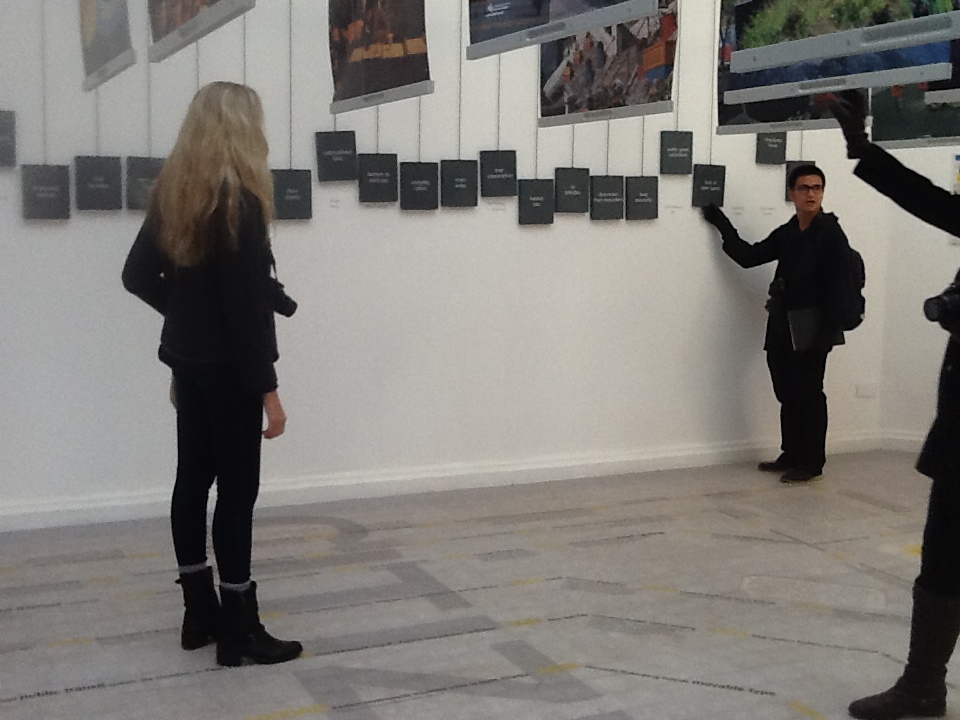
I wanted to encourage my colleagues to react to the prevalent professional and cultural tendencies of our time that place such emphasis on individual and isolated actions. I encouraged them instead to demonstrate the importance of influence and of the continuity of cultural endeavour, to illustrate common and shared ideas that form the basis of an architectural culture.
-David Chipperfield, Director
Every two years, almost always in early November when the weather is chilly and the crowds have died down, I take my design students up to Venice to see the Architecture Biennale. I’ve seen its evolution over the years, less physical and more digital, less formal and more social. It’s always a thrill and almost always provides inspiration for my own work, and (I hope) that of my students.
This year’s theme, Common Ground, is well-chosen. We can no longer afford the luxury of individualism, squandering resources and marring public space for the short-lived glory of creative individuals. Unfortunately, the theme is also generic enough to be stretched and molded around any content the exhibitor chooses to display, content which occasionally seemed to be pulled from back rooms of studios in haste. Bernard Tschumi’s posters, Zaha Hadid’s resin(?) casts, Hans Hollein’s students’ models, Ateliers Jean Nouvel’s Slussen Masterplan competition for Stockholm. There were a plethora of collections which were cool to see: Cino Zucchi’s like-minded objects Billie Tsien/Todd William’s Joseph Cornell like compositions from their friends, and the 40,000 hours of student models. FAT’s investigation of copies. Anything and everything can be “common ground”. Another interesting exhibit was that of the team led by Norman Foster which projected images, words and sound to create a compelling experience of globalization in which Architecture paled by comparison to socio-political and ecological phenomena. I also liked the work of Zurich’s Günther Vogt which focused on Venice and its public assets, such as water, a good choice to open the exhibit.
Amongst the national pavilions, the theme was often more coherent. The Swiss “ensemble”, the German “reuse” and the Japanese “Home-for-all” showed the effects of humility and collaboration, for too long missing in architecture. The Italian Pavilion, curated by Luca Zevi, touched on the right areas of interest, from this generations fascination with green space to a former generation’s (that of Adriano Olivetti) progressive design thinking. Some of the other work included seemed to lack “common grounding” but I may have missed something in my haste. Two days is not enough to do justice to all this work, and I’m still pouring over some of the catalogs to understand better some of the projects.
Perhaps it was because the week began with the re-election of President Barrack Obama, the candidate who at least stands a chance at fixing our country and our planet, it was one of those rare moments when I felt a bit of national pride as I entered the US Pavilion. I absolutely loved this installation, which interprets the Common Ground theme very wisely with a focus on Spontaneous Interventions. I liked it for its layout (thanks mostly to M-A-D studio, whose director Erik Adigard had spoken to our students back in Rome). Outside, a collection of orange red cubes (soft but precisely molded) could be scattered, stacked and assembled in a variety of combinations to create useful spatial formations. The floors in the four rooms are printed with quotations and timelines related to urban history, worth the time to read and follow. Above your heads hang panels printed on one side with colorful bar codes which indicate thematic focuses of the projects described on the other side, projects which have in common an American pragmatism and the courage to act without waiting for orders from on high. Guerrilla gardening, urban agriculture, creative squatting, participatory urbanism, barter markets, and more fill the 124 panels. It is easy to scan them, walking through the aisles laid like grapevines above you. But when something looks interesting you reach up and pull down the panel to eye level, an action that activates a counterweight on the wall where the key “solution” is written, revealing the key “problem”. Brilliant. The content, too, was an inspiration. Art in Odd Places, NY Street Advertising Takeover, Rebuild Foundation’s 1415, Islands of LA, and dozens of others all make you think. It’s a bit derivative of Design Like you Give a Damn or WorldChanging, but so positive nevertheless. Check out the full catalogue of “interventions” at http://www.spontaneousinterventions.org/interventions/information.
The Biennale is also a good excuse to spend time in Venice, which amazes me every time. But for that, my post from a couple years back already tells my point of view.
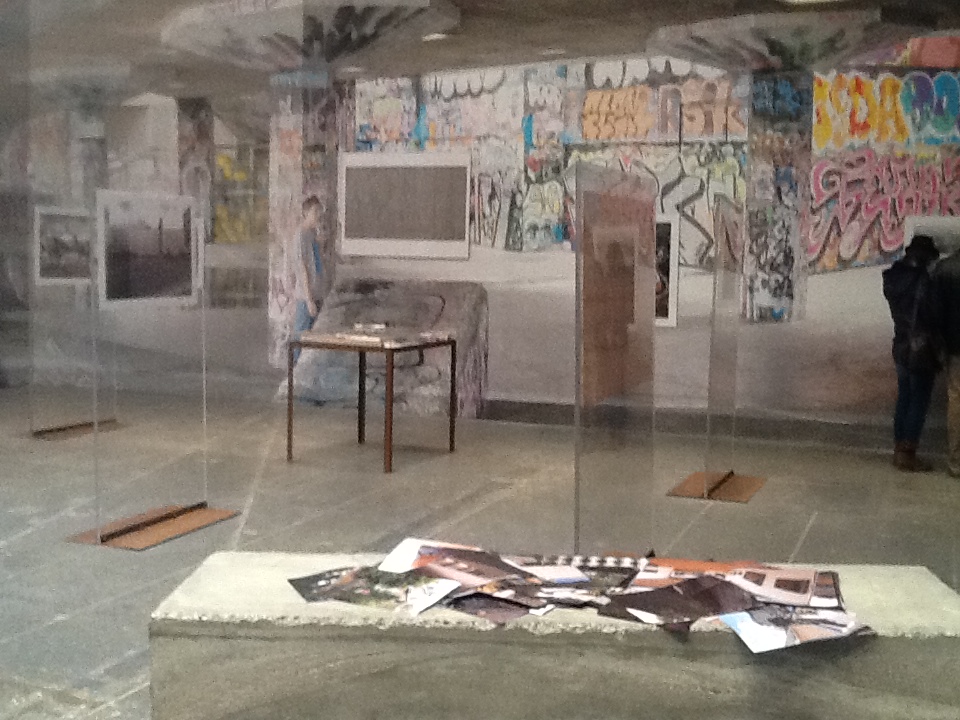
OMA
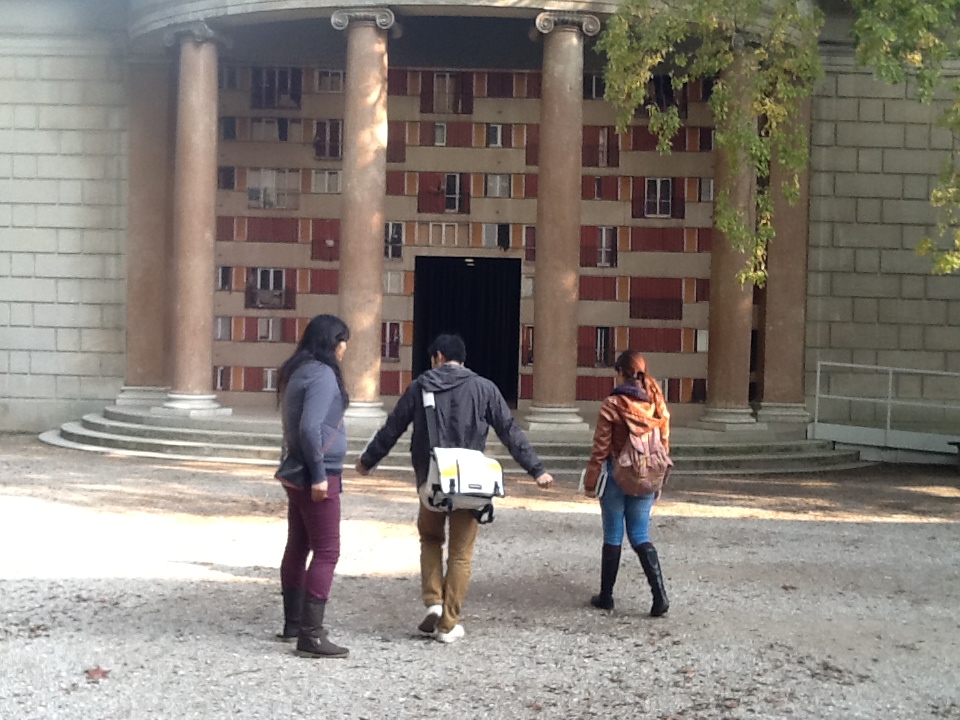
outside French Pavilion
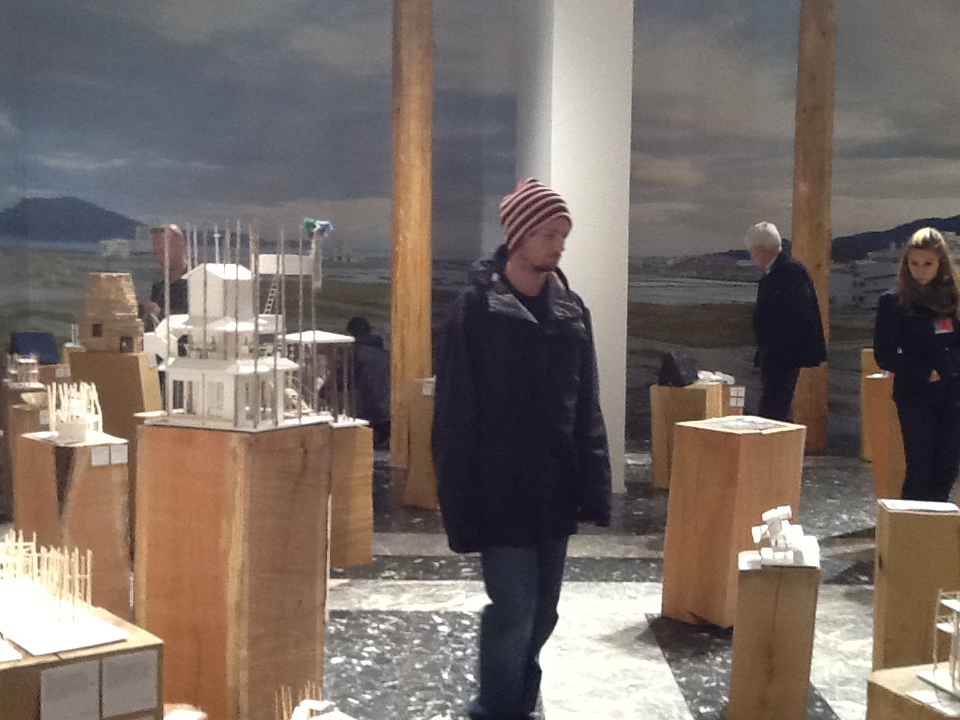
Japan
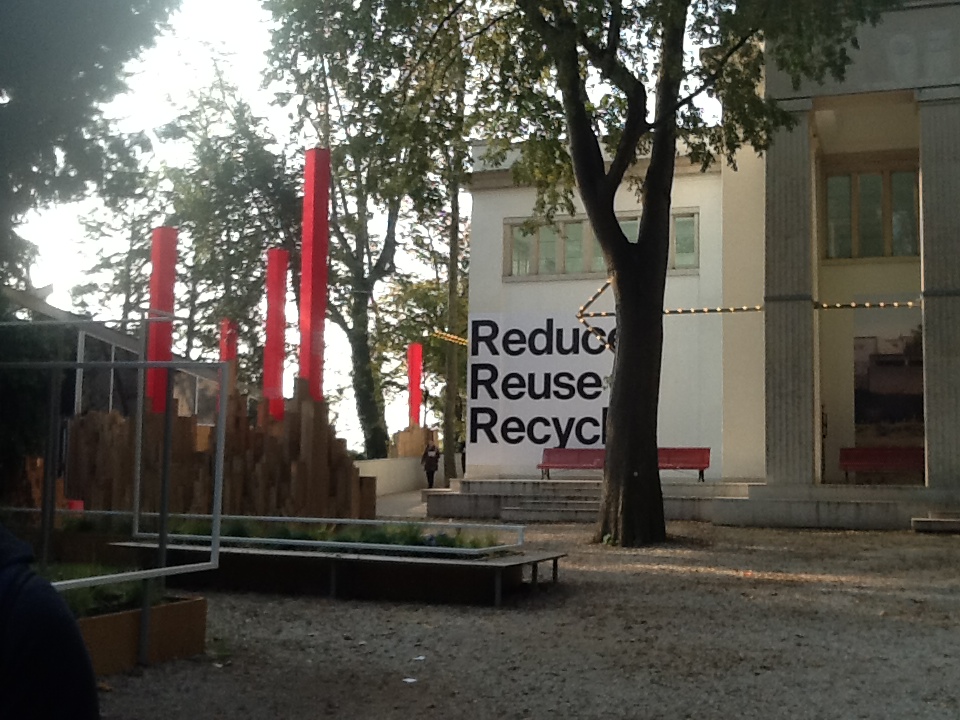
German Pavilion
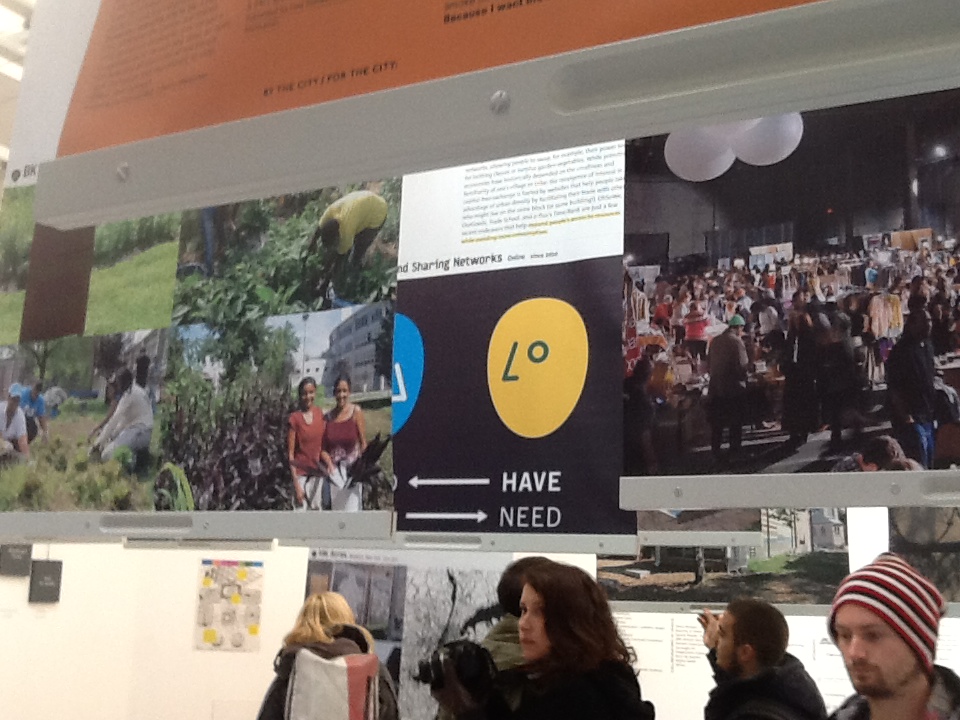
inside US pavilion
A week dedicated to sustainable cities
Last week I was thrilled to participate in the Ecoweek events organized in Rome by Elias Messinas and the Ecoweek team, including Francesco Bedeschi of GBC Italia and Maria Luisa Palumbo of InArch. This was the second Italian Ecoweek and the first in Rome. It opened with a full schedule of talks and presentations at the Casa dell’Architettura. My opening talk was on “Re-use of Space, Spaces of Re-use” in which I proposed productive activities based on material resources to replace the pure consumption pushed by the neo-liberal city. I was followed by Ulf Meyer of Invenhoven Architects and Elena Barthel of Rural Studio who both gave fascinating presentations about their organization’s work. A long series of Italian architects, from Orizzontale to Modostudio to 2TR and others then presented their ideas and their work. Many of them would lead student workshops over the following days, addressing urgent problems from urban ecology to social sustainability. Later in the week the Goethe Institute hosted a roundtable discussion on Sustainability and Education where Ulf, Elena and I were joined by Camilla Bevilacqua of ARUP and Aylin Ayna of Mimar Sinan Fine Arts University in Istanbul. Japanese architect Kengo Kuma gave the keynote address on Thursday at Roma Tre University, where on Friday the outcome of the workshops was presented. The results are all online at http://ecoweekconference.org/files/ecoweek2012_ROME/workshops.html#presentations
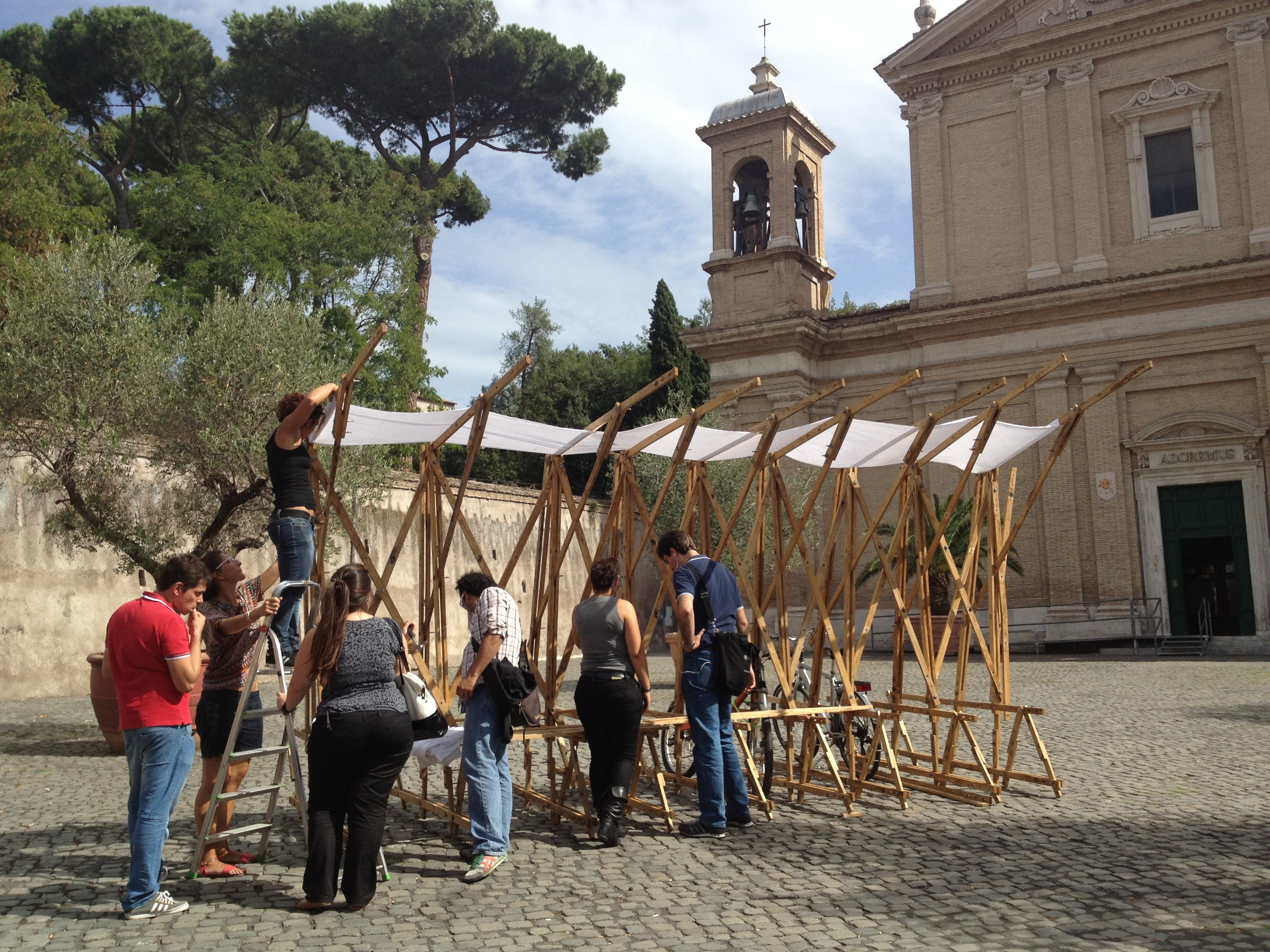
I was particularly involved in the work of the first team who proposed a serious bike-sharing system, much needed by Rome, and built a prototype in the piazza in front of our office off of Circus Maximus (in the photo above). Israeli Architect Dan Price, with Elena Barthel from Rural Studio and Paolo Cascone of COdesignLab led the international team who managed to coordinate a real design-build effort to success. Thanks to the various stakeholders of the space, Father Alberto of the church, Cinzia Abbate and various other architects with whom Studio Rome shares space, and the Campagna Amica Farmer’s Market across the street, a real experiment in productive use of public space was carried out. More projects like this and Rome will be once again a place for people, ideas, and urban vitality.
The Upside-Down News
I happened to have time today to both turn on the tv and to browse national news and, perhaps because I had been out of touch for a while, I was very aware of how all the bad news sounded good to me. Auto sales are down, gas prices are up, traffic is clogged, stock prices are down. Great, so why are all the adjectives negative? Tragic, Disastrous, Crisis, Negative, Troubling, etc.? The only “positive” (sic) news I heard on FOX was that bad weather in the southeast had brought electricity and natural gas prices up which benefited the market. So human suffering is good news when it leads to stock increases?
I want to hear this kind of news report:
In other good news, Italian car sales are down and bicycle sales are up…Meanwhile, underemployed auto-workers have found more profitable employment in green technology businesses which have benefited from reduced red tape.
High gas prices and heightened enforcement of traffic laws in Rome have led many drivers to simply leave their cars at home.
Traffic in Rome today forced motorists to abandon their cars and walk to their destination, leading to a dramatic improvement in air quality and a reduction in the rate of traffic mortalities which is normally one of the highest in Europe.
Markets are celebrating a positive downsizing today as uncertainties have prompted a massive liquidation of investments. Money is instead being invested directly in local community projects such as schools, libraries and green technology startups.
Weather emergencies have helped shut down off-shore drilling this weekend, although this may only be a temporary respite.
Now back to you, Jack.
Roma Straordinaria (Extraordinary Rome)
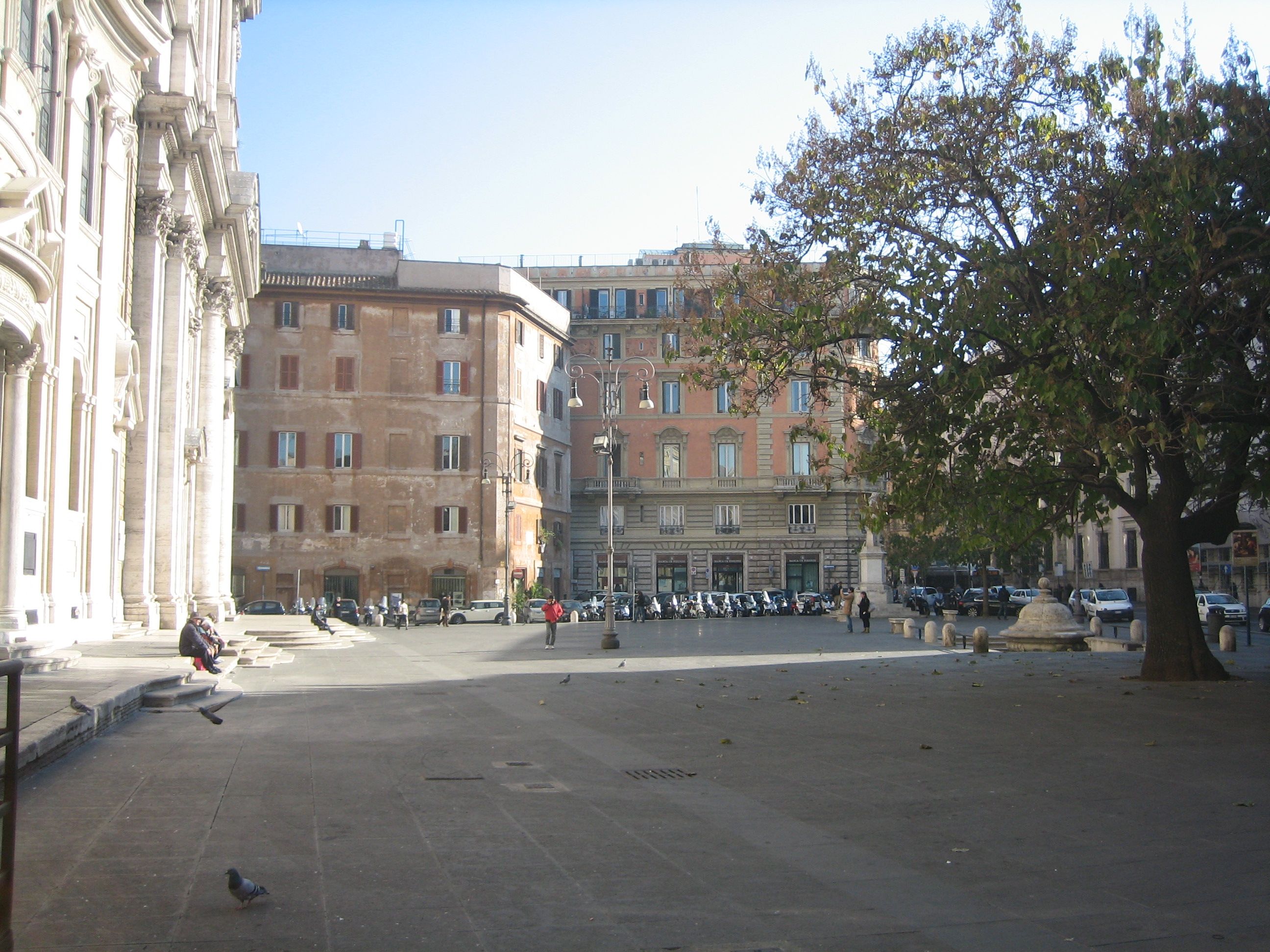
I recently launched the bilingual Forum Roma Sostenibile to which I have been dedicating a few precious minutes each day to link to interesting articles, promote valuable initiatives and highlight critical issues, translating quickly back and forth from English to Italian or vice-versa as necessary. I recognize that by now this word “sustainable” is over-used and it’s not without a sense of irony that I apply it to Rome.
Rome is not a “normal” city but an extraordinary (straordinaria) one. In seeking to make it more “sustainable” I like to think we are making it more like itself and less like normal, standard, global cities. We don’t want Rome to be Tokyo or Vancouver or even Paris. Sustainability means providing the needs of the present without compromising the ability of future generations to provide for their needs, and Rome has been doing that pretty well for dozens of centuries—thus the “still” in this blog’s title.
A sustainable Rome doesn’t need to be less passionate, less chaotic, less magical, less comically astounding, less Roman. There are centuries of accumulated experiences, materials, traces, memories and more to be shared and only a fool would try to clean that up and replace it with a sanitized “green city.” A sustainable Rome would be filled with sounds, smells, tastes, chance encounters, vistas, poetry and contrasts. Minus certain blight that we have come to associate with the city: motor-vehicles, globalized advertising, disorganized waste, privatized common space and resources, and a handful of other common injustices. Fighting these doesn’t necessarily mean fighting Rome any more than curing a disease necessarily means killing the patient.
It’s not an easy task to get Rome back on course, but neither is it “idealism” as I so often hear. Italians adapt pretty well to change when it has clear advantages (the internet is pretty much ubiquitous now but I remember in the late nineties working for an internet company and hearing that Italians would never get on board!). This weekend we will see the streets of Rome filled with bicycles, as it has more and more of late, and those willing to make the switch will realize that cycling is another win-win for Rome. The same can be said of a return to more frugal lifestyles which consume less energy, water and other resources and produce less trash.
We’re talking about improving the quality of life for everyone, launching sustainable economic growth, and if you want to wave the sustainability flag as well, yes, ensuring that future generations can also provide for their needs. What’s not to like?
Rome Chooses Green (Cars)
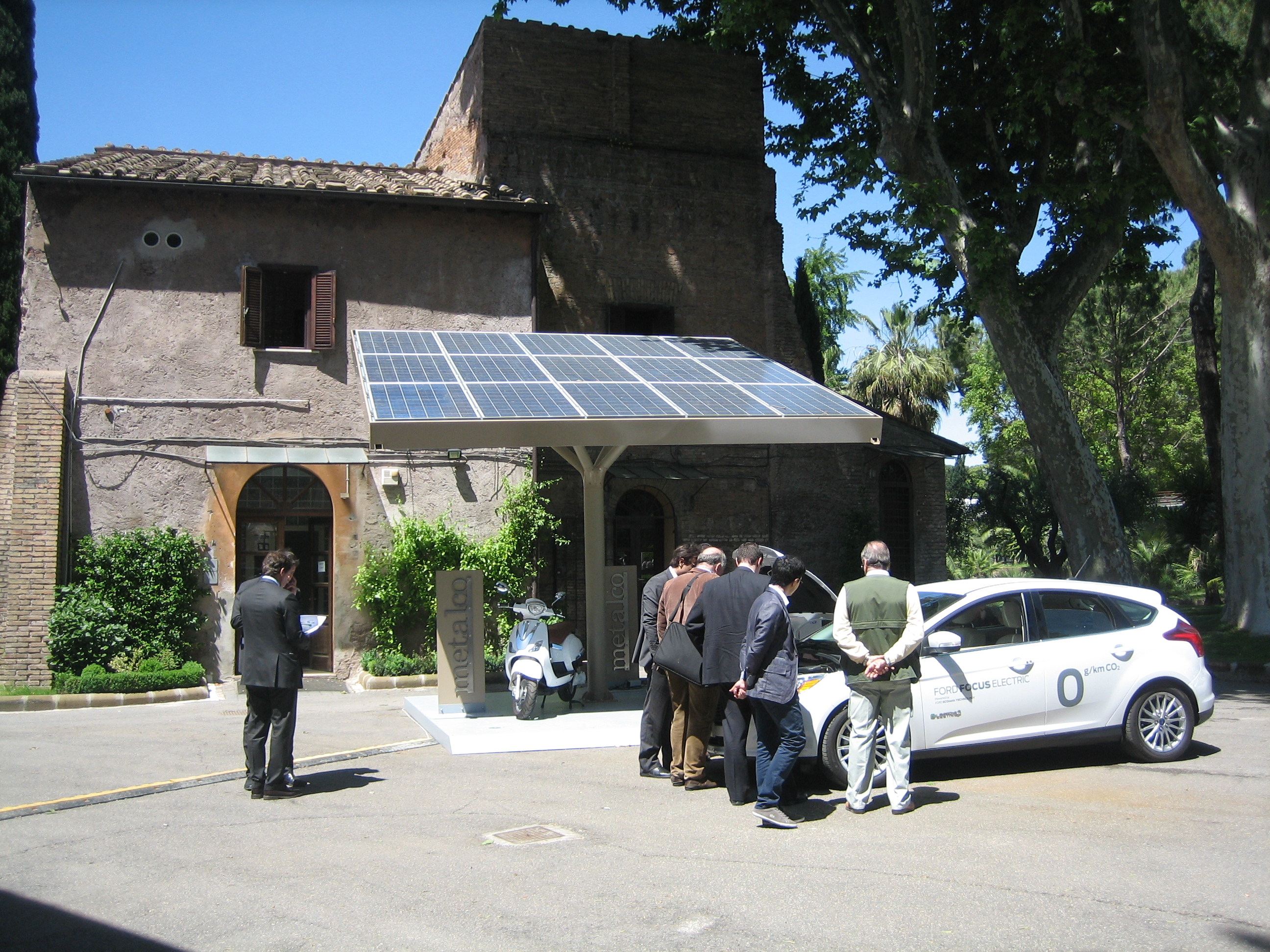
I biked over to the convention on Sustainable Mobility this morning. I wasn’t the only one; there were at least three other bicycles on the bike rack there, plus a very cool white bike (I’m not sure if the color was intentionally a reference to cyclist mortality as white bikes have become worldwide) with a Copenhagen wheel produced by Ducati Energia.
Otherwise, it was all about cars. The sponsors were car makers, the discussion was about fuel for cars. Outside, under the shade of beautiful trees of the gardens of the San Sisto Aranciere, men (why is it always men) in suits were fondling shiny new cars. The message was clear: cars are here to stay, but it would be better if they pollute less and consume fewer fossil fuels.
I disagree. Richard Register, in a wonderful book called Ecocities, says that clean cars are worse than dirty ones because they give us an alibi to prolong the automotive culture which has devastated our cities. Smog is not the only problem; the decline of quality of life cars have caused is also about danger, inefficiency, enclosure of public space, visual pollution, social blight and more. And the electricity for electric cars has to be produced somewhere, using which renewable sources?
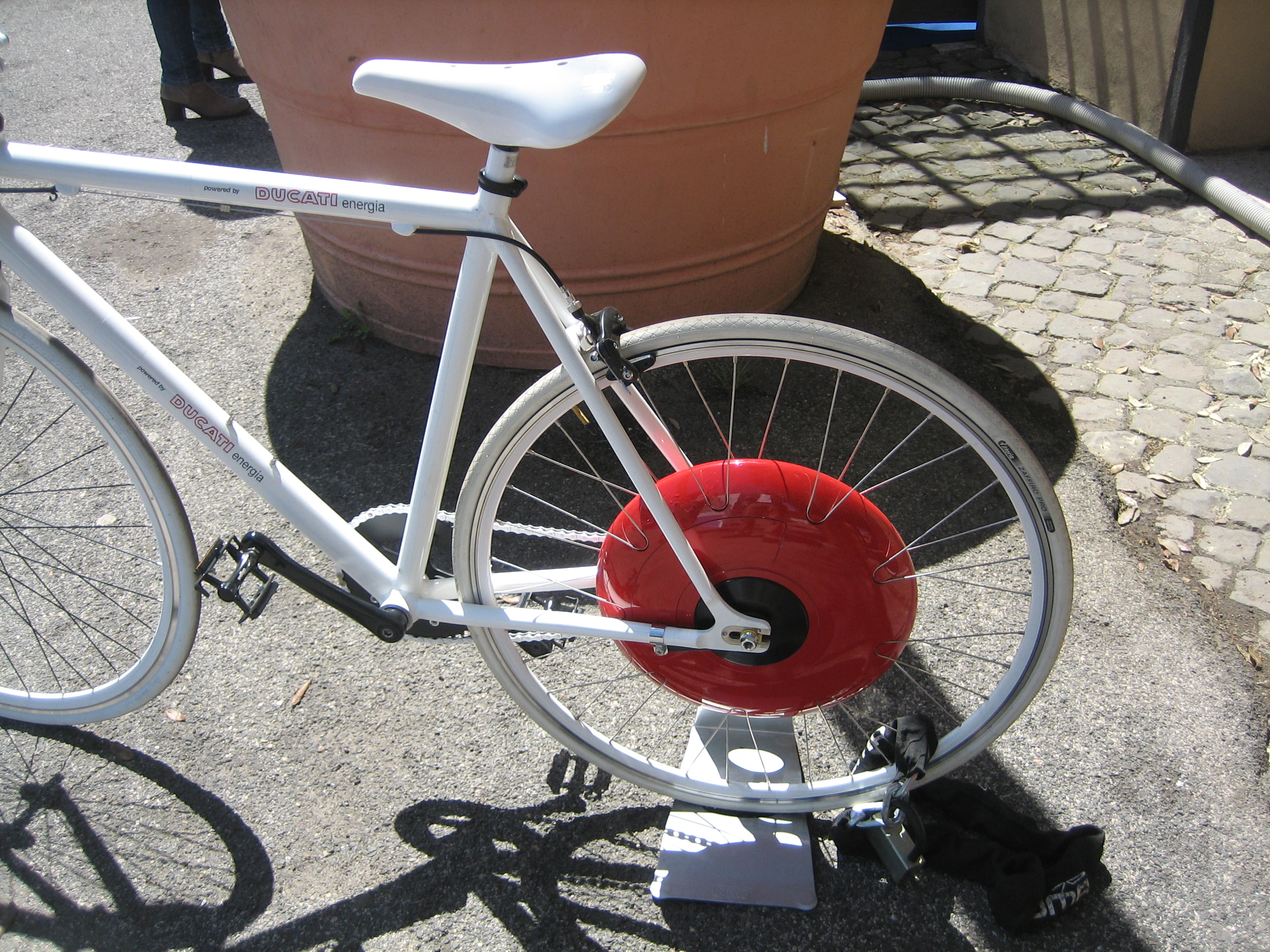
The Copenhagen wheel version Ducati Energia (not the same as Ducati motors I learned).
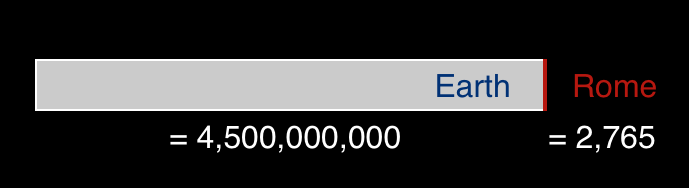
I presented this talk at a conference yesterday entitled Grand Tour of the 3rd Millennium, hosted by the University of Rome at Tor Vergata. I chose the topic when I looked at the calendar. On April 21 Rome celebrates its 2,765th birthday. The following day is Earth Day, a holiday that has been celebrated only since 1970 but which marks a planetary history of roughly 4.5 billion years, in comparison to which Rome’s long history is minuscule. While it’s easy to associate cultural heritage with Rome and environmental sustainability with the Earth, I am interested in building bridges between these two fields both locally and globally since I see the city not as the source of our global environmental problems but as the solution…. Can Rome leverage its richly layered history to sustain itself economically and ecologically? Can it re-use the resources accrued over time to avoid excess consumption? I believe it can and teach a course called Ecological Urbanism which uses Rome as a Laboratory to address themes such as waste, energy, water, transportation and land use.
Historically we can register the city’s swings between moments of material growth and moments of frugality and adaptation. While conventionally the growth periods are considered the high points, I subscribe to an upside-down view of history, inverted to recognize those moments when limitations have lead to frugality which has nurtured innovation, whereas the periods generally identified as ones of great “success” (the Roman Empire, the Renaissance, or the late 20th century economic boom) have been those of greatest inefficiency, inequality, waste and environmental destruction. In Rome we can see relatively clearly these urban cycles, this swinging of the pendulum, from expansion to frugality.
One thinks of the agricultural austerity of the early Republic as opposed to the excesses of the Roman empire when growth began to exceed sustainable limits leading to deforestation, over-grazing and collapse. Douglas Rushkoff writes in Life, Inc. of how the so-called “dark ages” were actually a time of great advances before the Renaissance went about monopolizing prosperity (and he cites medieval historians’ claim that the quality of life for the average European in the 11th through 13th centuries was better than at any time since. Read more…
19th century public space

Piazza San Silvestro. 2012. The newly renovated square off Via del Corso in the neighborhood of Piazza di Spagna was inaugurated today and I biked over to see it. It was a nice day, not too warm, and the hard stone benches were doing their job, filled with lounging people. The elliptical space which makes up one component of the square (the other is a rectangle, separated by a bumpy paved non-road in between) recalls the Campidoglio, of course, but without Marcus Aurelius. Without any central focus, in fact, until street artists are allowed to move in. People seemed to be watching the absence of cars and little more.
Today there were police enforcing the rules of civic behavior which seemed to mean no art, no sports, and no commerce. I wasn’t exactly reprimanded for my bicycle but kindly told that bikes weren’t allowed in the pedestrian zone, and that the only bike rack in the neighborhood had been removed. In 2012 designing an urban space without considering bicycles must be a crime somewhere, but apparently not in Rome.
There were a lot of proposals submitted for this space–I had done a few sketches myself–and many of them included the elements that one expects of a 21st century public space in a dense metropolis: a fountain, shade, art, transit, bike racks (and better, bike-sharing), green space, a range of seating for a range of users. Piazza San Silvestro rather looks like a picture of a public space, not really intended to work for long, especially not in the summer when the lack of shade will be excruciating. It’s a place that tries not to offend but neither to offer itself as a democratic space.
I suspect it will be just a question of time before the Alfa Romeo’s of the politically entitled move in to idle where the public buses once waited.
The Internet of Things
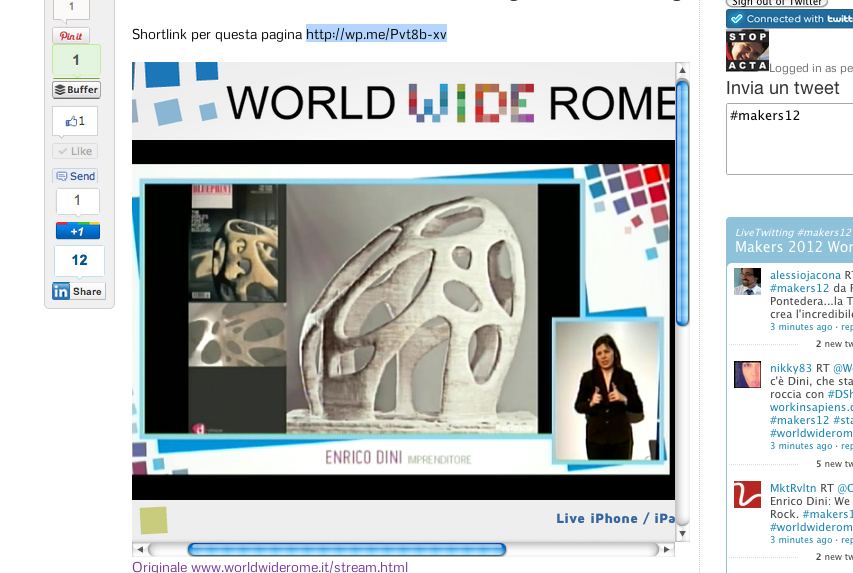
image courtesy of worldwiderome.it
As so often happens in this world of constant information bombardment, today I found myself juggling overlapping, interconnected bits of information and ideas. A paragraph on the city of Rome website caught my eye as I was searching for information on a conference on Rome’s Sustainable Future or something, a reference to which I had caught a fleeting glimpse of on a poster plastered to the wall by Porta Portese. My rough translation follows:
Hundreds of discarded articles including old refrigerators, washing machines, boilers, televisions, cookers, stored and disassembled without the required authorization and prerequisites necessary to protect the environment and public health….The operator of the area was found not to be enrolled in the National Order of Waste Management.
I was fascinated that the project that I have been proposing for years for the site, a center for the green economy where items currently considered waste could be treated as resources, seemed to have become a reality. I was outraged that such an activity was being treated as criminal instead of ecologically sound. After all, these are items that previously were safe enough for our homes but now suddenly can’t be handled without public safety permits. But it’s ok to send them to a landfill as long as it’s run by a member of the right professional organization?
And then I read another blog post complaining about how the city does nothing to prevent people from dumpster diving, an activity practiced especially by Romany people in Rome. I have great respect for these people who work hard to salvage the useful stuff that we thoughtlessly discard. If anything, the city should prevent people from throwing good stuff so casually into dumpsters.
My day improved later as sat in great hall of the former Aquarium, now Rome’s “Casa dell’Architettura”, listening to speakers at the World Wide Rome conference, a day long event focused on the new economy of digital fabrication. Finally I was hearing voices discuss the absurdity of the waste of our consumer lifestyles. Enrico Bassi of FabLab Torino described workshops on electronic recycling and re-use. I missed the talk by Chris Anderson of Wired, entitled “ATOMS ARE THE NEW BITS”, but caught Roberto Bonzio and Massimo Menichinelli who shared stories of startups and innovation. Terms like social ecommerce, sellsumers, user generated goods, and Fab money were being thrown about. The whole event had that upbeat feel of a self-improvement seminar, amplified by the very 21st century phenomena of multiple screens, throbbing base soundtrack, and an audience half-listening, half chatting distractedly, tweeting, status-updating, or sampling images and video to process, cut and splice and share later. I loved it.
During a less interesting talk I checked Facebook on my iphone, followed a link from my friend Doug Rushkoff to a blog post he wrote on CNN where he said very much what I was hearing in this conference in Rome. “We need to begin by abandoning the fruitless quest for gainful corporate employment, and instead start working for ourselves and one another. We must stop outsourcing our savings and investments to bankrupt corporations, and instead invest in the people and businesses in our own communities — however we define those.” This is happening and I, for one, am on board.
Zolle. Fresh Roman Food from Farm to Doorstep.
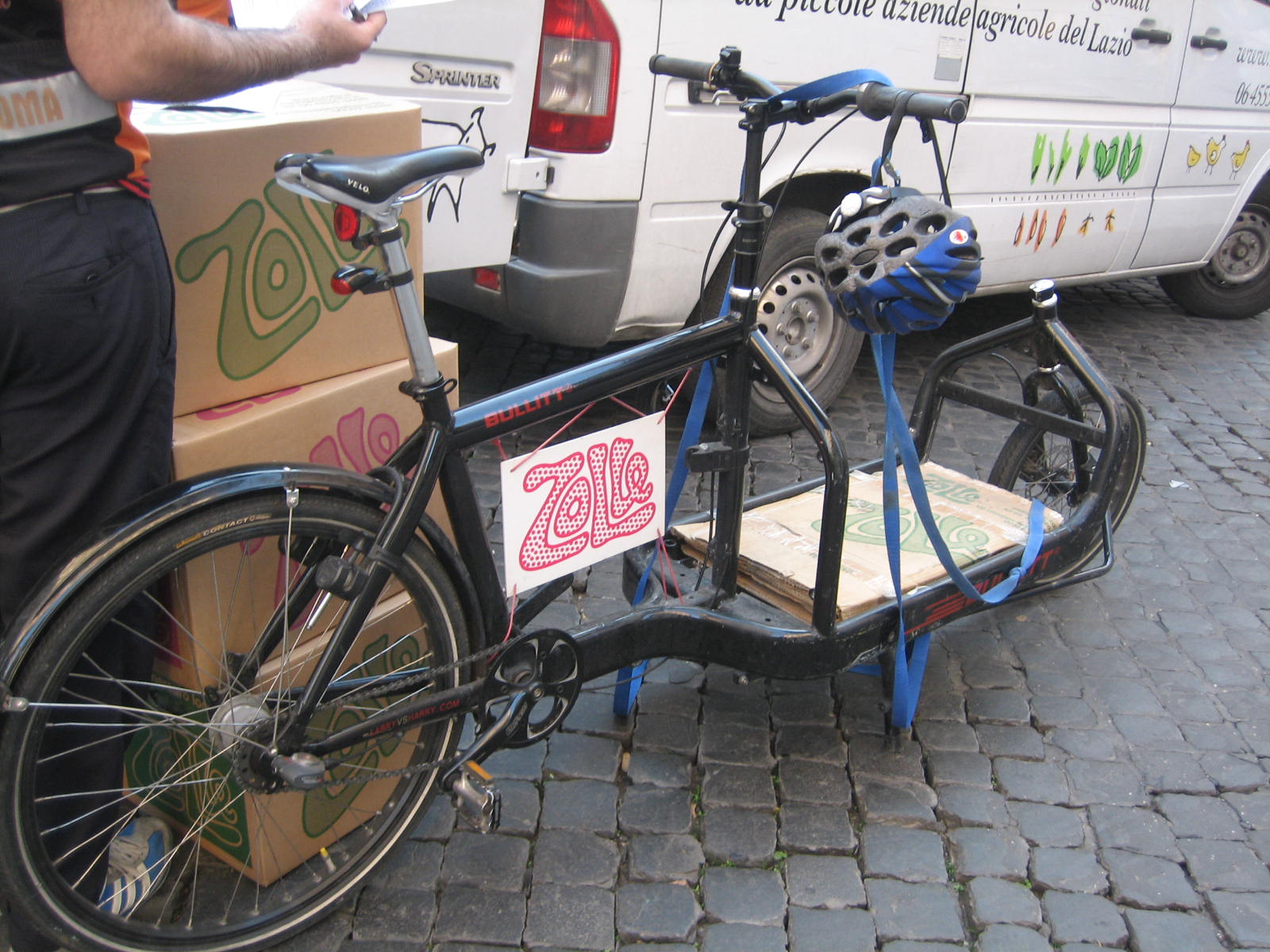
Yesterday I witnessed the future. Smart, creative, green food distribution, fresh local produce delivered on souped up cargo bikes to subscribers around the city. The company is called Zolle and I’ve run into them before here and there, promoting the idea at the Campagna Amica market for example. This time I watched as they unloaded crates from their van onto bikes for the “final kilometre.” According to their website, the food arrives at your door within 24 hours of being harvested, which is a pretty incredible freshness record. 90% from the Lazio region, the food is local and seasonal and selected by the people who know it best. My favorite feature: Zolle highlights the producers on their website so you know whose tomatoes and whose artichokes you’re eating. Any readers subscribe to this?
 SUSTAINABLE ROME